
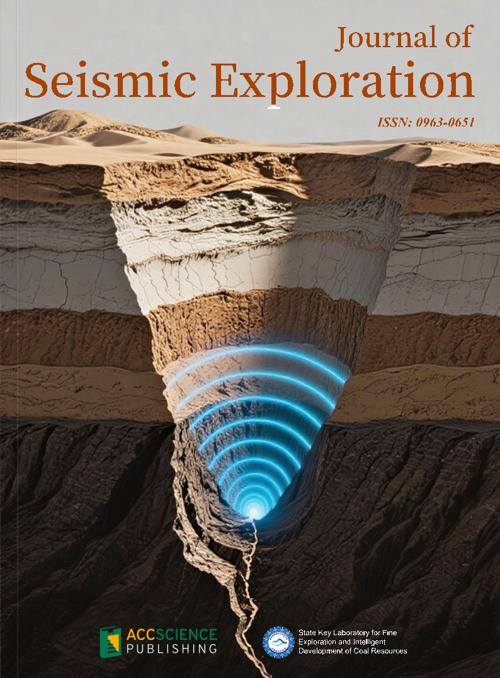

This Special Issue explores the convergence of artificial intelligence and wave-equation-based physics for seismic exploration, with an emphasis on human-inspired AI architectures. Drawing on concepts from cognition—such as selective attention, adaptive gating, and resonant filtering—these approaches aim to make data processing, imaging, and inversion more intelligent and robust. Contributions are expected to combine physics-driven wavefield modeling with cognitive-like decision mechanisms to address real-world seismic challenges.
Topics of interest include, but not limited to:
(1) RHSF-based AI for seismic section interpretation
– Using Recursive Heaviside Sequence Functions as decision-gating models to select meaningful seismic events (faults, horizons, coherent wavefields), mimicking how human interpreters focus on significant features while suppressing irrelevant information.
(2) Optimization in human cognition versus FWI optimization
– A comparative analysis of similarities and differences between cognitive optimization (attention, memory minimization, decision gating) and Full Waveform Inversion optimization (misfit minimization, gradient-based updates, multiscale strategies).
(3) Wave phenomena in consciousness versus classical 3D wave equations
– Commonalities and distinctions between low-pass–filtered resonant cognitive wavefields and conventional three-dimensional seismic wave propagation.
(4) Human-like AI for seismic data processing and QC
– AI-assisted muting, trace selection, and preprocessing that emulate expert human judgment, using wave-based features (coherency, frequency content, moveout) combined with adaptive gating rather than fixed rule-based thresholds.
(5) Other advanced AI techniques for seismic exploration
- Innovative applications of emerging AI methodologies, with potential to improve accuracy or efficiency in seismic data processing and interpretation, including but not limited to wavefield simulation, seismic inversion, and imaging.
In this Special Issue, references to cognition or consciousness would be presented only as conceptual motivation for AI design, while all accepted papers would be required to demonstrate clear relevance to seismic exploration, data processing, imaging, or inversion. We cordially invite researchers to submit original research articles and comprehensive reviews.